
Composters on Four Legs
A solar eclipse, pastured pigs, and life on the Vetter Farm
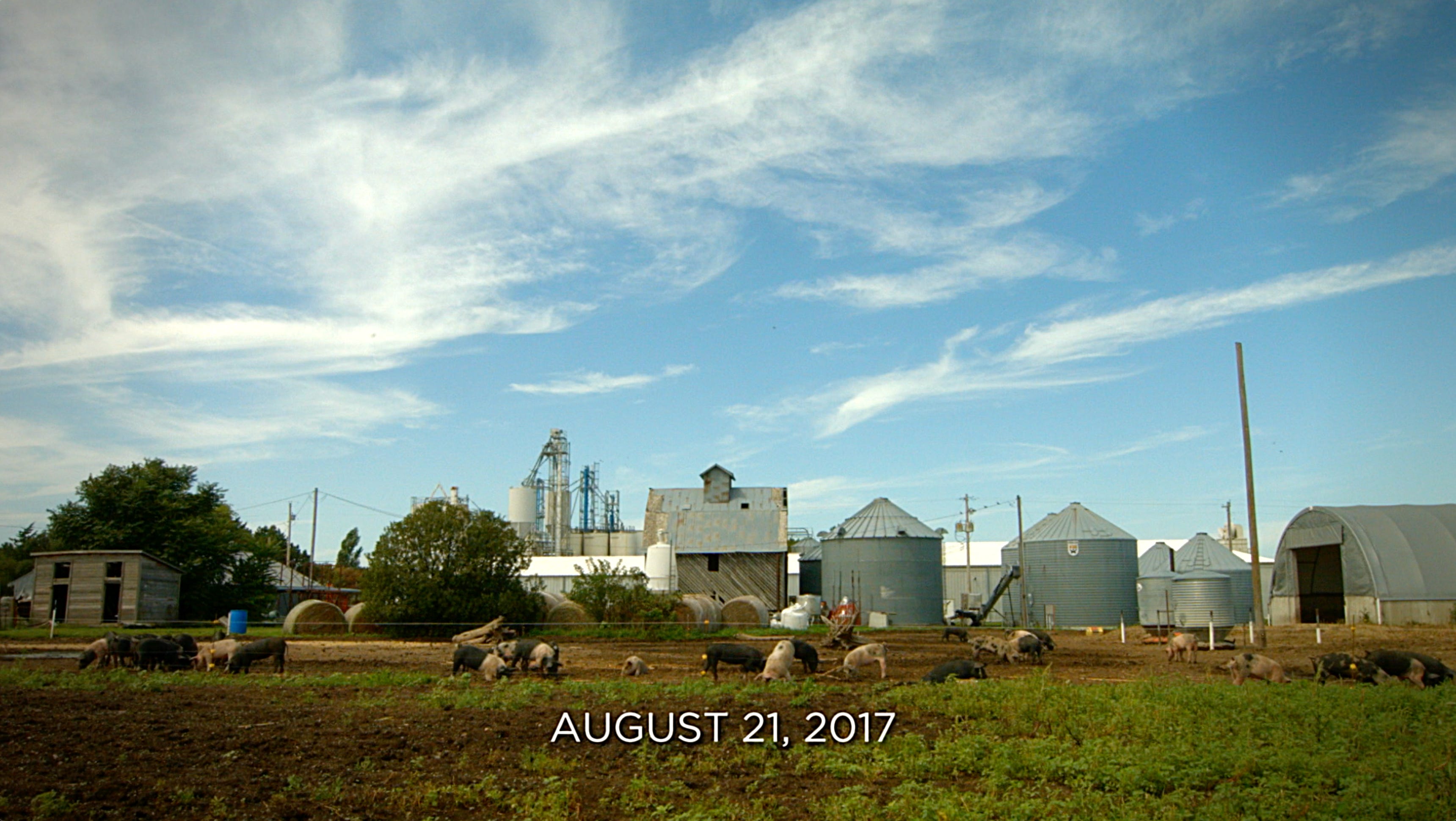
A subscriber writes: “I am enjoying the farm reports with Molly and Jay. They make me miss farming. This week they talked about pigs but I don’t see any pigs. I want to see pigs.”
Yes, this week’s farm report was about preparing the fields for said pigs; they’ll be out in the pasture soon.
In the meantime, we hope the video below satisfies the desire for some porcine personalities.
In 2017, the Vetter Farm was in the path of totality for a solar eclipse. Rather than joining everyone over at Prairie Plains Resource Institute for a viewing party—with cardboard glasses and telescopes—Bonnie Hawthorne, filmmaker of Dreaming of a Vetter World, set up a camera next to the pig enclosure and spent the eclipse picnicking with farmer friends while shooting a timelapse video. She’d heard that animals get fooled by eclipses and wanted to see what the pigs would do.
The hogs lived in an enclosure—with water features and plenty of mud—close to Grain Place Foods, where it was easy to feed them leftovers from the food processing plant.
David Vetter started getting requests for pastured pork. He decided it made sense to let the hogs wander a bit. After all, as former farm manager Mike Herman liked to say, “Pigs are composters on four legs.”
Since everything on the Vetter farm is an experiment, in 2019 David decided to give pasturing a try.
“We noticed the hogs were especially active in areas with bindweed problems,” David says. “In the following crop year, there was very little bindweed pressure.”
So hogs turned out to be good weed suppressors as well as walking composters.
“Pigs on pasture ate 5% to 7% more feed, but their average daily rate of gain was 25% to 27% higher.”
Translation: roaming pigs are happy pigs. They eat more, and they put on more weight.
The only problem is they tear up the paddocks a lot more than the cows do.
“They have destroyed a few paddocks because, logistically, I can’t get them moved fast enough with all the other work on our plates,” says Jay Goertzen, “But we are trying a few new things this year. It’s a long and steep learning curve. I do know that the customers really like the end product and the demand is growing, so we are working hard to figure out the logistics to make this happen without completely wreaking havoc on the field they are in.”
“We will be trying to move them more often this year to see if we can limit some of their more destructive habits,” David Vetter says. “We only graze them on the last season of our rotation pastures, which will be plowed and planted to soybeans the next season.”
The experiment continues. Stay tuned!