

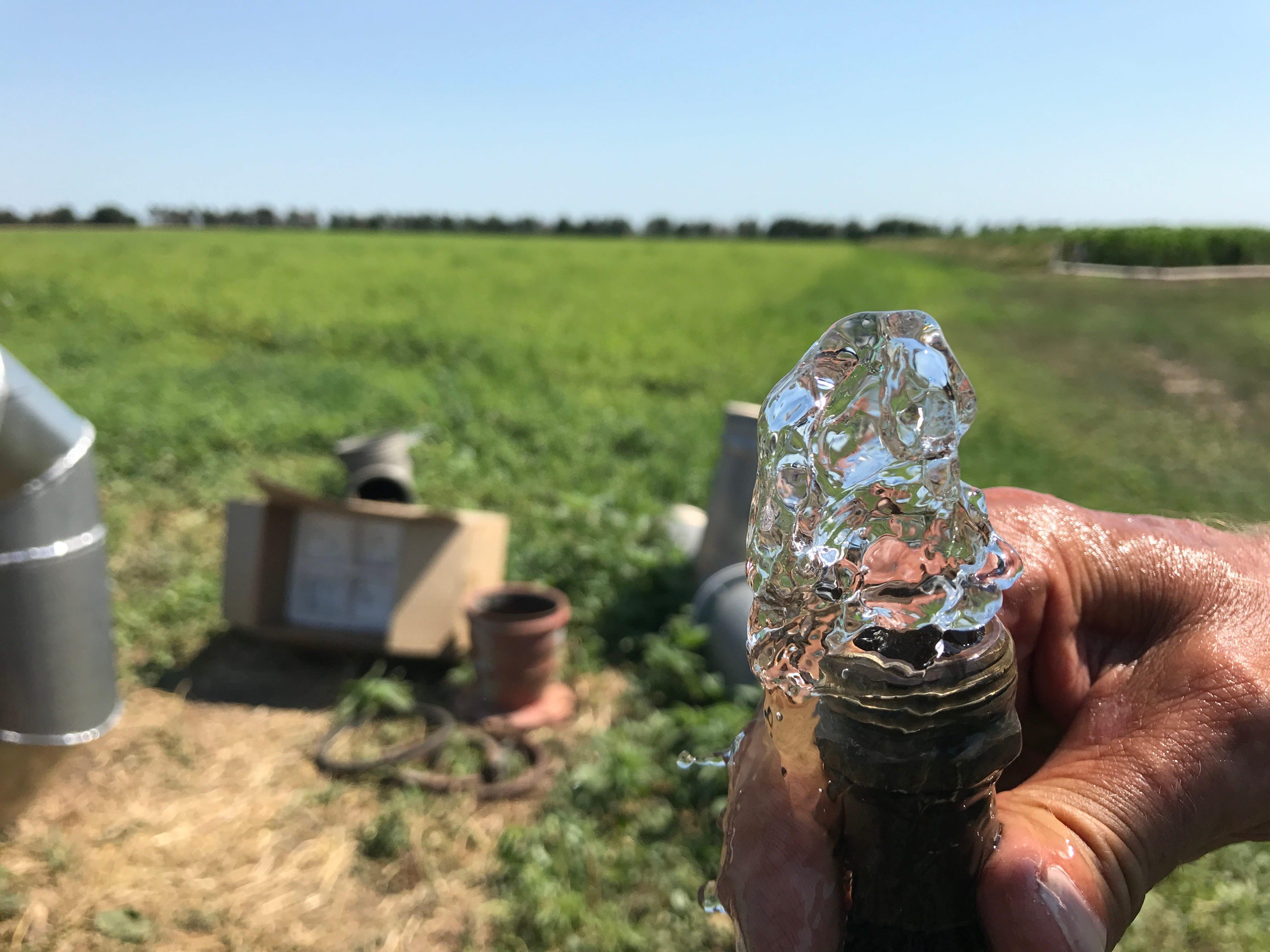
There is no finer drink of water than one from an irrigation spigot or a garden hose fed by a farm well. That clear, cool groundwater isn't just the best drink in the world—it also makes a refreshing rinse for your head, neck, arms, and torso after coming in from the hayfield for lunch on a hot summer day.
At least it used to be.
It irritates me to no end that the water from the wells at Grain Place is no longer safe to drink. No more cupping a hand to catch a stream of water coming out of the irrigation well. How could it be contaminated with nitrates on a farm that has not applied nitrogen fertilizer or other petrochemicals for more than half a century?
The answer, unfortunately, is that groundwater doesn't recognize property lines.
Now, when I visit the farm, I have to drink water from Culligan.
This summer, we're drilling a new domestic well that will reach deeper into the aquifer. We hope it will provide safe drinking water for the people who live, work, and visit Grain Place, as well as for our livestock. I can't wait. The drilling rig showed up this week.
Folks are starting to wake up to some of the unintended long-term consequences of what we are doing to our soil and water. Municipalities are grappling with contaminants in their water systems. Homeowners are installing reverse osmosis systems beneath their kitchen sinks. Health care providers are seeing the human consequences of these actions.
One of the nation's leading experts on the health effects of nitrates in drinking water is Jesse Bell of the University of Nebraska Medical Center. He will be one of the featured panelists during the afternoon program at our 2026 Field Day.
I hope you’ll join us.
Jay Vetter
Editor’s note: Here’s a little something from the vault—an excerpt from an interview with Ed Dadey at Art Farm Nebraska that ties in well (no pun intended) with this subject. It offers additional context on the Ogallala Aquifer and the so-called “Bradshaw Blue Babies,” a story that still raises eyebrows today.