

Sixty or so years ago, one way farm families were identified was by color. If someone said they were red or green, we knew that signified the color of their tractor.
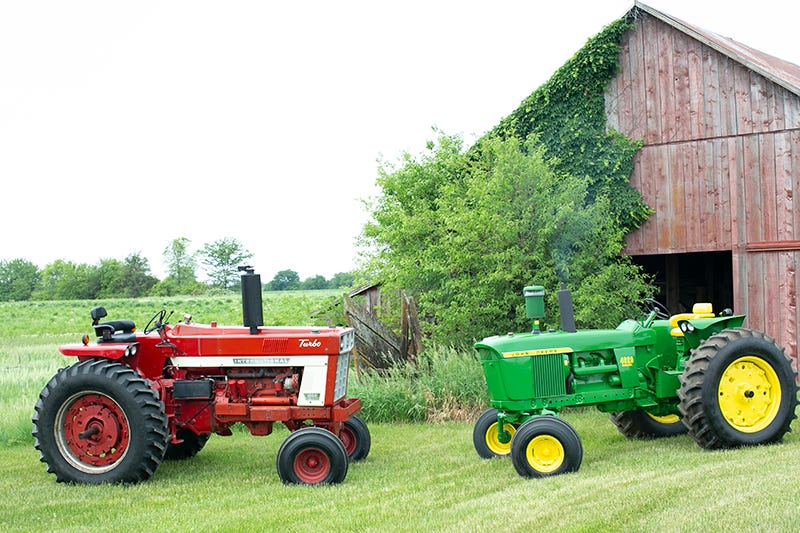
Two equipment manufacturers dominated in our part of Nebraska: green was John Deere, and red was International Harvester. Brand loyalty was fierce. The manufacturers did a good job of cultivating this with free and for-sale color-coded merchandise.
Last time I visited the Plainsman Museum in Aurora, Nebraska, I got another look at my Uncle Marion's collection of green toy implements. That’s right, we were green people—and still are.
Times have changed. Now manufacturers can claim legal loyalty through intellectual property (IP) laws. Farmers can spend tens—even hundreds—of thousands of dollars on equipment they are not legally allowed to repair because they do not own the software that controls the machinery. “Right to Repair” laws are being enacted, but they struggle to keep up with advances in artificial intelligence (AI).
A similar dynamic is playing out with seed. Farmers purchase bioengineered (GMO) seeds only to discover that they do not really own them because the companies retain rights to the patented genetic traits. In effect, farmers license the technology and agree not to save and replant those seeds the following year—as they did in the old days. Legal disputes have even arisen when patented biotech traits appear in fields where farmers did not intentionally plant them.
At the Vetter farm, we try to practice farming in ways that nurture rather than control others.
Nurturing soil—nurturing community,
Jay